





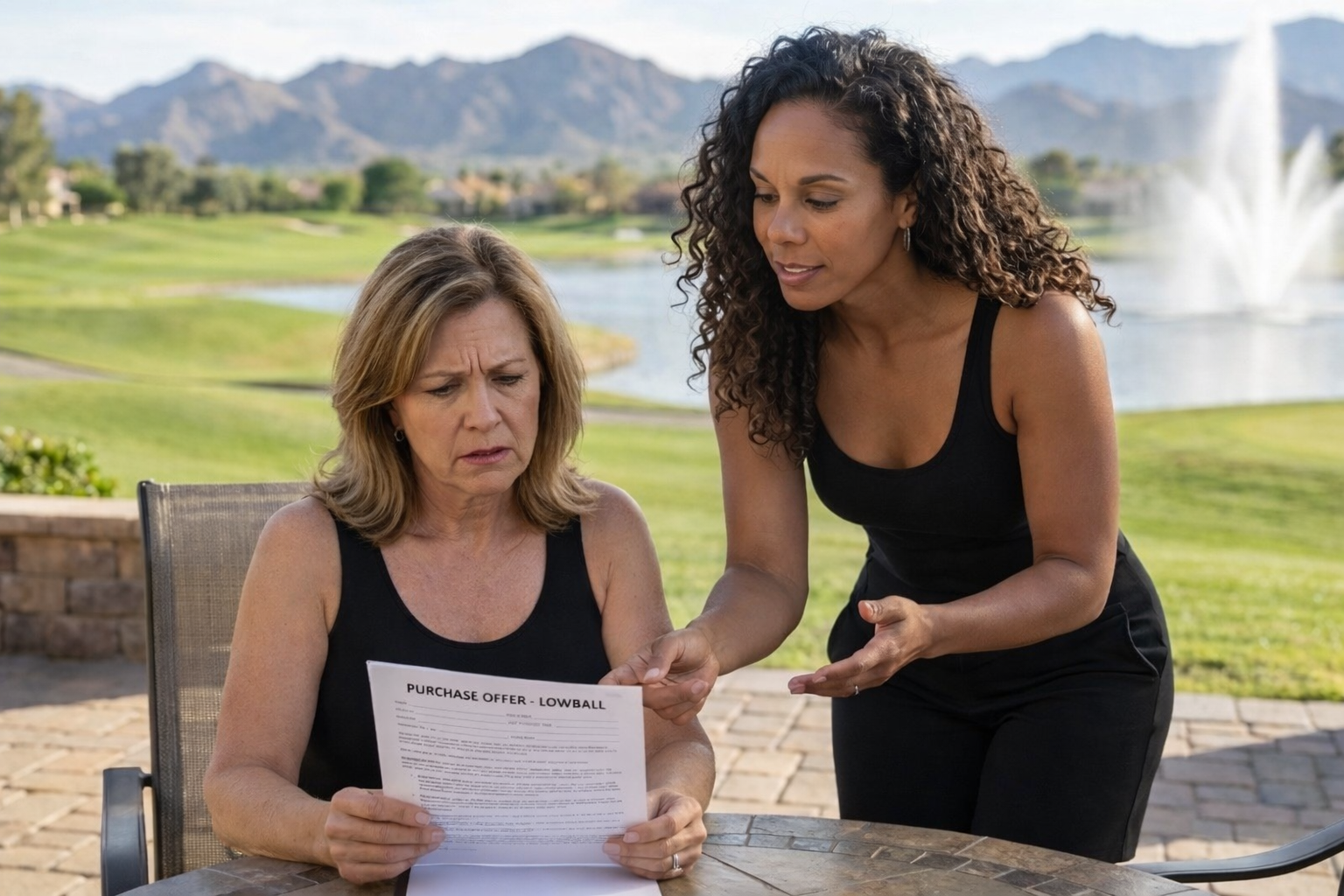
A Lowball Offer Isn't the End, It's Where We Start Building Your Win
Let me be honest with you about something.
When a lowball offer comes in on your home, my first job isn't to pull up the comps or draft a counteroffer. My first job is to sit with you in that moment and say: I've got you. This is not a crisis. This is actually where the fun begins.
I've been doing this for 20 years. I have sat across from sellers wonderful, hardworking people who have poured their hearts into their homes and watched their faces fall when a number came in that felt disrespectful. I get it. Selling your home is personal. There are memories in those walls. There is equity you worked for. There is a move you are planning and a future riding on this.
So when a buyer comes in with a number that feels like they didn't even take you seriously? That stings.
But here is what I want you to hear: a lowball offer is not a verdict on your home. It is an opening move. And if you let me, I am going to help you turn it into a win.
Why Lowball Offers Happen (And Why It's Usually Not About You)
The first thing I tell my sellers is this: don't take it personally, because the buyer almost certainly isn't thinking about you personally at all.
Buyers are thinking about their budget, their risk tolerance, their fear of overpaying, and yes their desire to feel like they got a deal. According to the National Association of Realtors, negotiating a better price is one of the top reasons buyers cite for wanting agent representation. In other words, coming in low is often just... strategy.
In Fountain Hills specifically, I see lowball offers show up for a few predictable reasons:
Timing. Our summers can slow things down. When market activity cools, some buyers assume sellers are feeling pressure and will take less just to get a deal done. They are testing you.
Days on market. If a home has been listed longer than the average, buyers read that as vulnerability even when the home is priced well and shows beautifully. Perception becomes leverage in their minds.
Pure negotiation style. Some buyers come in low on everything, every time. It is not personal. It is just how they play.
Uncertainty. Buyers worried about repairs, market shifts, or financing sometimes build that anxiety into their offer number. A low offer can actually mean a highly interested but nervous buyer and nervous buyers can become great buyers with the right guidance.
Understanding why the offer came in the way it did is step one. And it is my job to find that out before we do anything else.
My First Move After a Low Offer: I Pick Up the Phone
Before we draft a single counteroffer, I call the buyer's agent.
This is one of the most valuable moves in the entire process, and it is one that not every agent takes the time to make. That conversation tells me so much more than the contract does.
I want to know: Is this buyer serious or just fishing? Do they have flexibility they haven't shown yet? Is there something specific driving the number a repair concern, a financing limitation, a timeline need? Are there terms that matter more to them than price?
The answers shape everything.
I have been in calls where a buyer's agent is aggressive and overconfident, clearly trying to set a tone. I don't take that bait, and I don't let my sellers get rattled by it either. I stay measured, I gather what I need, and I come back to you with clarity instead of drama.
Because here is the truth: real estate negotiation is as much about reading people as it is about reading numbers. The better I understand who is on the other side of this deal, the better I can protect you and steer us toward the outcome you actually want.
Then We Look at the Market Together, Honestly
Once I have a feel for the buyer's side, I come back to the data.
We look at comparable sales. We review active listings. We talk about where your home stands against the competition right now, in this market, at this moment. Zillow's market research and Redfin's data center are both tools I use to ground these conversations in real numbers rather than feelings.
Sometimes this step gives you more confidence. We look at the comps together and confirm that your home is priced right, shows better than anything near it, and has real advantages buyers should be paying for. That clarity makes it much easier to counter firmly.
Other times, the market review brings useful perspective. Maybe a competing listing has a more updated kitchen or a larger backyard. Maybe a small adjustment in presentation or strategy would strengthen your position. That is not bad news that is information we can act on.
The Arizona Regional Multiple Listing Service tracks all of this locally, and I stay deep in that data so that when we are negotiating, we are negotiating from facts. Not assumptions. Not emotion. Facts.
How We Build Your Counteroffer And Why It's More Than Just a Number
Here is where I love my job.
A strong counteroffer is not just a higher price with attitude attached. It is a plan. And building that plan with you figuring out exactly how to respond in a way that protects your equity AND keeps this buyer engaged is genuinely one of my favorite parts of this process.
Most buyers who submit a low offer expect a counter. Many are counting on it. That first number is often just the starting point, and they have room they haven't shown you yet.
So we look at the whole deal. Price, yes but also financing strength, escrow timeline, appraisal contingency, repair requests, closing costs, and possession timing. The Consumer Financial Protection Bureau has great resources on how buyers think about closing costs and concessions, and understanding that psychology helps us structure a response that lands well.
Sometimes the smartest counter is a firm stand on price with clean terms. Sometimes it is a small movement on price combined with something that makes the buyer feel like they won something because that is often what buyers are really after. They want proof they got a deal, even if the real value is more emotional than financial.
That "something" might be:
- A closing cost credit that costs you less than a price reduction would
- The refrigerator, washer, dryer, or another item you weren't taking anyway
- A flexible possession date that works better for their move
- A home warranty that gives them peace of mind for a few hundred dollars
I have saved deals with a lawnmower. I am completely serious. Buyers want to feel heard. When they do, they stay in the transaction.
The Psychology of the Win (For Both Sides)
This is something I think about a lot, and I want to share it with you because it changes how the whole process feels.
Buyers want to win. Sellers want to win. And the beautiful thing about a well-negotiated real estate deal is that both sides genuinely can.
The Harvard Program on Negotiation talks about the concept of "expanding the pie" finding creative solutions that give both parties something they value rather than fighting over a single number. I think about that constantly when I am at the negotiating table on your behalf.
Your win might be protecting your equity, getting a clean close, or hitting a specific timeline. The buyer's win might be feeling like they didn't overpay. Those goals don't have to conflict. My job is to find where they can align.
When I walk you through your counteroffer options, I am not just throwing numbers at the wall. I am thinking about what this specific buyer needs to feel good about the deal, and how we get you there without giving up what matters most to you.
And Yes, Sometimes We Walk Away
Not every offer deserves a counter. I will tell you that honestly when it's true.
If the gap is too wide, if the terms are too risky, or if the way the offer was presented suggests this buyer is going to be difficult from contract all the way to closing walking away may be the strongest move we can make together.
Walking away is not failure. It is clarity. It means we know what your home is worth, we know what you need, and we are not going to force a deal that serves neither of us.
And this is where I always remind my sellers of something that sounds simple but is genuinely true: there is a pot for every lid. The right buyer is out there. Not every buyer is your buyer. Some people are looking for a steal. Some are looking for the right home. Those are not always the same person and we don't have to settle for the wrong one.
What Confidence Really Looks Like in This Process
I want you to feel taken care of. Not managed, not talked at actually taken care of.
That means I will be honest with you even when the honest answer isn't what you were hoping to hear. It means I will tell you when the market is speaking and we should listen. It means I will also tell you when you have every reason to hold firm and wait for what you deserve.
Research from the National Bureau of Economic Research has shown that sellers who use experienced agents net meaningfully more on their home sales and I believe a big part of that is exactly this: staying calm and strategic when the pressure is on.
Confidence starts before the offer arrives. It starts with pricing your home fairly, presenting it beautifully, and knowing exactly how it compares to everything else on the market. When those pieces are in place, a lowball offer doesn't shake us. It just gives us something to work with.
The Bottom Line
If you are one of my sellers and a low offer just hit your inbox, take a breath. I mean that literally. Take a breath, and then call me.
We are going to talk through it. We are going to understand what drove that number. We are going to look at your market position honestly. And then we are going to build a response that protects your equity, keeps the deal alive if it deserves to stay alive, and makes sure you walk away from this feeling like the win happened because it did.
Lowball offers are part of selling real estate. They always have been. But with the right mindset and the right person in your corner, they become a lot less scary and a lot more manageable.
You've got me. Let's go get your win.📞 480-227-5976 ✉️ [email protected]
FAQs
Is a lowball offer always a bad sign? Not at all. It often just means a buyer is negotiating strategically. It is still a sign of interest and interest is something we can work with.
Should I respond or ignore it? Almost always respond. A thoughtful counter keeps the door open and gives us the chance to improve both price and terms without losing leverage.
What if my home has been sitting on the market a while? That can invite aggressive offers, but it doesn't mean you should accept less than you deserve. It means we review pricing, presentation, and competition honestly and then negotiate from clarity.
Can small concessions really save a deal? Yes, more often than you'd think. Buyers want to feel like they won something. Sometimes a small credit or an appliance keeps a great buyer in the deal without meaningfully affecting your bottom line.
How do I know whether to counter or walk away? That's exactly what I'm here for. We look at your goals, the buyer's seriousness, and whether there's a realistic path to something that works for you. I'll give you my honest read every single time.
Check out this article next